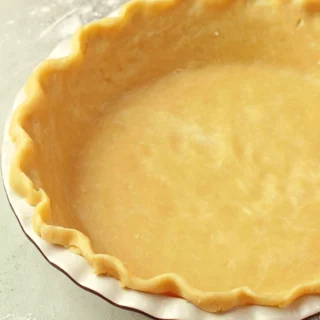
Homemade Pie Crust
Homemade Pie Crust is an easy recipe for a flaky, buttery crust that’s perfect for any pie - sweet or savory!
Ingredients
- 2 ½ cups 313 g all purpose flour
- ½ tablespoon granulated sugar
- ½ teaspoon salt
- 1 cup 226 g unsalted butter, chilled and cubed
- 3-5 tablespoons iced water
Instructions
To Make the Crust:
- In a food processor, combine the flour, sugar, and salt. Pulse until mixed.
- Add cold, cubed butter and pulse until the mixture becomes coarse and crumbly, with pea-sized pieces of butter.
- Sprinkle 3 tablespoons of ice water over the mixture and pulse just a few times to incorporate the water. Do not over-pulse!
- If the mixture looks dry and crumbly, add a tablespoon of water at a time and give it a quick pulse after each addition. Keep going until the dough holds together when you press it, but isn’t wet or sticky.”
- Place the dough on a work surface and gently form it into a ball. Do not knead the dough! Cut it into 2 equal portions and shape each into a disk about ½ inch thick. Wrap each disk tightly in plastic wrap.
- Chill the dough for at least 1 hour before using.
- Lightly flour your work surface, then place the chilled dough on it. Roll out with a rolling pin into a circle about 12 inches (30 cm) in diameter. If it sticks, lightly sprinkle it with more flour—but don’t overdo it!
- Carefully roll one edge of the dough onto the rolling pin, lift it, and gently unroll it over the pie pan. There’s no need to trim the excess—tuck it under the edges and crimp with your fingers.
- Refrigerate the crust for 15 minutes before baking.
Baking
- Line the crust with parchment paper, then fill it with pie weights (you’ll need about 2 packages). If you don’t have pie weights, dry beans or rice will work. This prevents the crust from puffing up.
- Bake at 220 °F or until the edges are lightly browned, about 17 minutes, then remove the weights and parchment paper. Prick the bottom a few times with a fork and bake for another 5 minutes, or until the bottom is lightly golden. Let cool to room temperature.
Pro Tip
- It’s best to follow the instructions for the specific pie you’re making. Some recipes call for an unbaked crust, some for a partially baked crust, and others for a fully baked crust.
Notes
- Use cold ingredients. Cold ingredients create a flaky texture! This keeps the butter from fully blending into the flour—those little bits of butter in the dough are what create a flaky crust.
- Don’t overwork the dough! The more you handle it, the more the butter melts and blends into the flour, and those small butter pieces are important. Overworking also develops more gluten, which can make your crust tough.
- Chilling before baking is very important! Chilling helps make the dough easier to roll out later.
- Roll gently and evenly. Use light, even pressure and rotate the dough a quarter turn every few rolls to help you form a circle. This also prevents the dough from sticking to the work surface.
- Chilling the dough again before baking helps keep the butter firm.
- If you notice the edges of the crust darkening before the pie is done, shield them with a pie crust protector or aluminum foil.
- Store in the fridge for up to 3 days or in the freezer for up to 3 months.
Nutrition
Serving: 1gCalories: 2061kcalCarbohydrates: 242gProtein: 33gFat: 104gSaturated Fat: 64gPolyunsaturated Fat: 40gCholesterol: 267mgSodium: 566mgFiber: 8gSugar: 5g
Tried this recipe?Please consider Leaving a Review!
